
News
Process flow of black anodizing
Time:2025.07.09 Source: Yuhuan Huahua Metal Surface Treatment Co., Ltd Clicks:
1. Surface pretreatment
Degreasing, rust removal, and alkali etching of aluminum parts to remove surface impurities and achieve uniform surface roughness.
2. Anodizing
Using aluminum as an anode, immerse it in an electrolyte (usually sulfuric acid solution), and after being electrified, a porous aluminum oxide film is formed on the surface of the aluminum material. Specifically, when current passes through the electrolytic cell, oxygen molecules react with the aluminum surface to produce aluminum oxide. This type of oxide sediment will infiltrate the pores and cover the surface of aluminum.
3. Coloring treatment
By electrolytic coloring or dyeing process, the pores inside the oxide film are filled with black pigment or metal ions.
electrolytic colouring
Electrolytic coloring is a process of coloring aluminum by further electrolytic treatment after anodizing. This process immerses the oxidized aluminum parts into an electrolyte containing heavy metal salts, including tin salts, nickel salts, and cobalt salts. The electrodes are usually made of stainless steel material. During this process, the aluminum oxide layer serves as the cathode. After being energized, ions from the metal salt deposit into the micropores of the oxide film, forming a stable metal oxide layer and presenting a specific color. Electrolytic coloring not only achieves rich color effects, but also significantly improves the durability and anti fading performance of colors.
Inorganic coloring
Inorganic coloring uses insoluble inorganic pigments, which are fixed in the pores of the anodic oxide film through ion exchange or deposition, thereby achieving high-strength color fixation. Typical inorganic coloring materials include cobalt sulfide, etc.
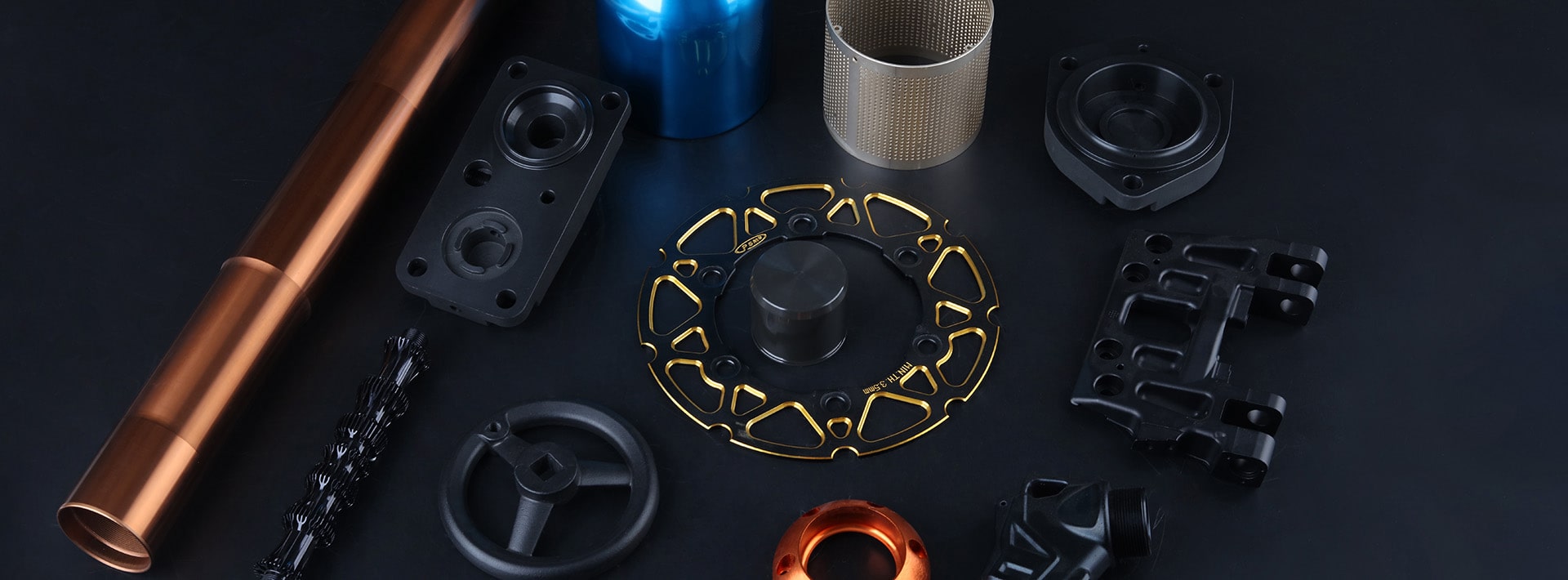
Inorganic coloring techniques are particularly commonly used in black anodizing processes. Its advantages lie in color stability, resistance to fading, and the ability to effectively enhance the UV resistance of aluminum parts. Even in long-term use or harsh environments, it can maintain a consistent appearance.
Organic coloring
Organic coloring uses water-soluble organic dyes, which need to be dissolved in warm water to prepare a dyeing solution, and then the oxidized aluminum parts are soaked in it. Due to the microporous structure of the oxide film, organic dyes can fully penetrate into the interior of the oxide layer, achieving a uniform coloring effect. The depth of coloring depends on the dyeing time, and the longer the time, the darker the color.
Although organic coloring can achieve a wider range of color choices, its light resistance and fade resistance are usually inferior to electrolytic coloring and inorganic coloring, making it more suitable for products that require vivid colors but are not exposed to outdoor environments for a long time.
4. Sealing treatment
This is the final step of the black anodizing process. Seal the pores of the oxide film in hot water or chemical solution to improve the corrosion resistance and stain resistance of the film layer.
 Online Service
 QQ Service
 Wechat